Also available as the designed PDF: download The Speaker’s Manifesto.
Written in Paris, May 2018. Self-published as a guide for anyone who wants to become a professional speaker.
Behind the Scenes
“But how could you live and have no story to tell?”
- Fyodor Dostoyevsky in White Nights
We’re back in Paris. It’s April 2017. Today is a big day for the Liberté Living-Lab, the civic tech innovation center that I have been working on for months to build. Everyone is ready, standing in the entrance hall, waiting… until it finally happens. Half a dozen police bikes block the street in front of the building, while a black tanned Citroen parks in front of the entrance. The bodyguards do a last surrounding check before opening the passenger door. And then, he enters the building.
The cameras are clicking, reporters holding out their microphones, and TV teams are lined up to get the best shots. After a few greetings, he looks around and pauses. A moment of silence overcomes the room until he asks: “So, what is this place actually about?”
Everyone smiles, but no one moves. This is when Eminem turns on his song in my head:
Look, if you had one shot, one opportunity
To seize everything you ever wanted
One moment
Would you capture it or just let it slip?
This is enough. I step forward, look the amazing human being in the eye and take leadership: “Welcome, Mr. President. Why don’t I give you a tour of the building?” And so we went.

Back in time and with my French scarf, showing the French president around
This is an example of an improvised speech, which turned out to be pleasing the French president. But there are other types of speeches, too. Those are the ones the people have been preparing for, and who now speak of front of hundreds effortlessly. Let’s jump into our imaginary plane and fly to the other side of the world, where someone else just finished his speech.
We’re in Florida. Tony Robbins just spoke his last words. His majestic hands are sweating. His body is full of adrenaline. He takes a quick second, takes a breath, and looks into the room. Thousands of people are staring at him, eyes wide open. And then it happens - one by one, the audience stands up, transforming the silence into a standing ovation. Tony bursts into his power stance, screaming away all his past fears, struggles, challenges, hardships and failures he went through to get here. The applause seems to be eternal, and when looking into the front row’s person’s glazing eyes, Tony knows - he just changed someone’s life.

Tony Robbins bursting into his fire mode
Tony is a great example of what the life of a top speaker looks like (not like me, at least yet). He is an idol for what it means to establish a personal brand, to rock on stage and create a cult around a niche topic that he created. Whenever you see him on stage, it seems so easy, even effortless. And yet, there is something else to be told.
Opening the Curtain
If you opened this book, then because you want to get there too. You want to be on stage. You want to impact people. You want to share your message. You want people to recognize you for who you are. You want to change the world.
In short, you want to be a top speaker. What does it take to get there?
Unfortunately, the part you read about Tony is only half of the story.
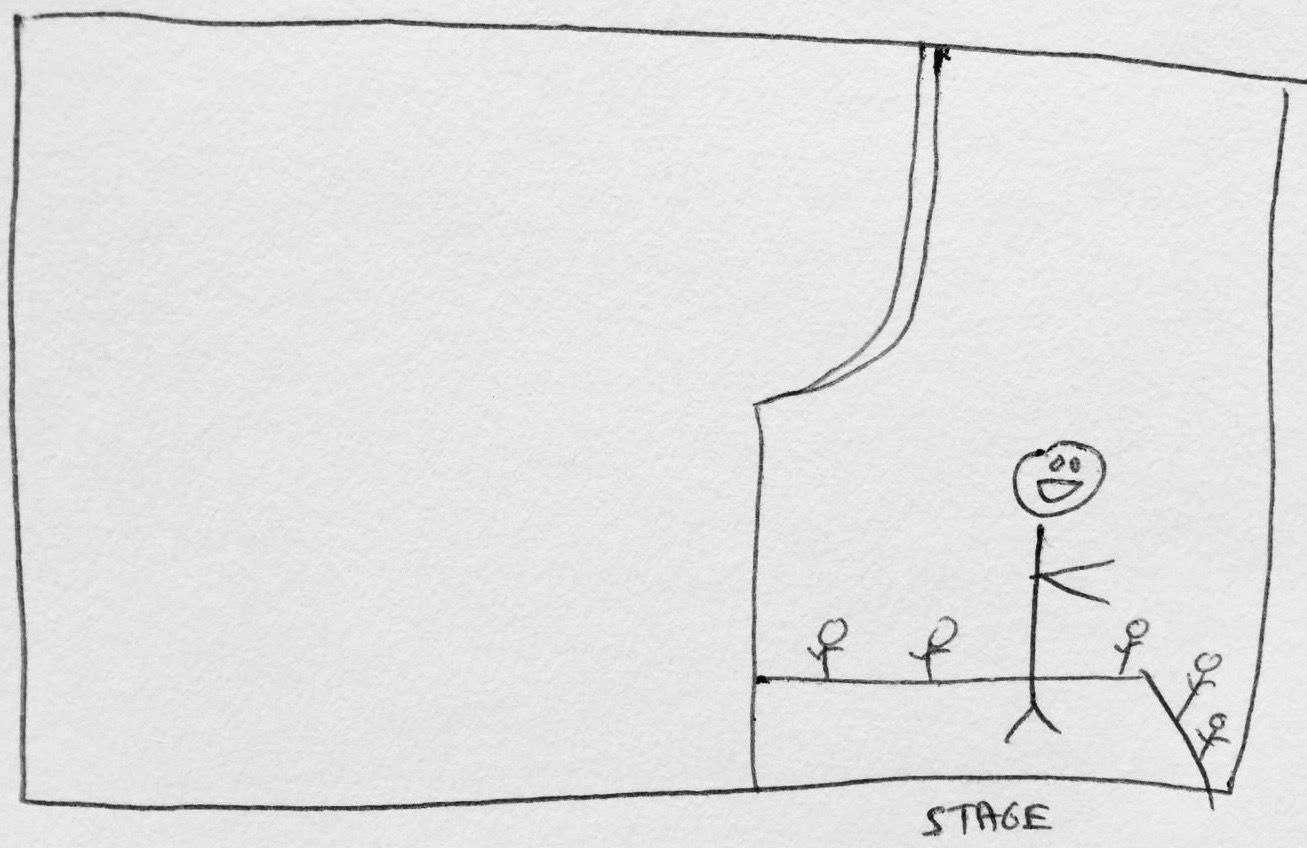
What you see on stage.
The other side of the story are the countless of hours Tony practiced his speech. How he had to overcome his family’s rejection to take his career path. How he had to train dozens of hours to overcome his fears of speaking.
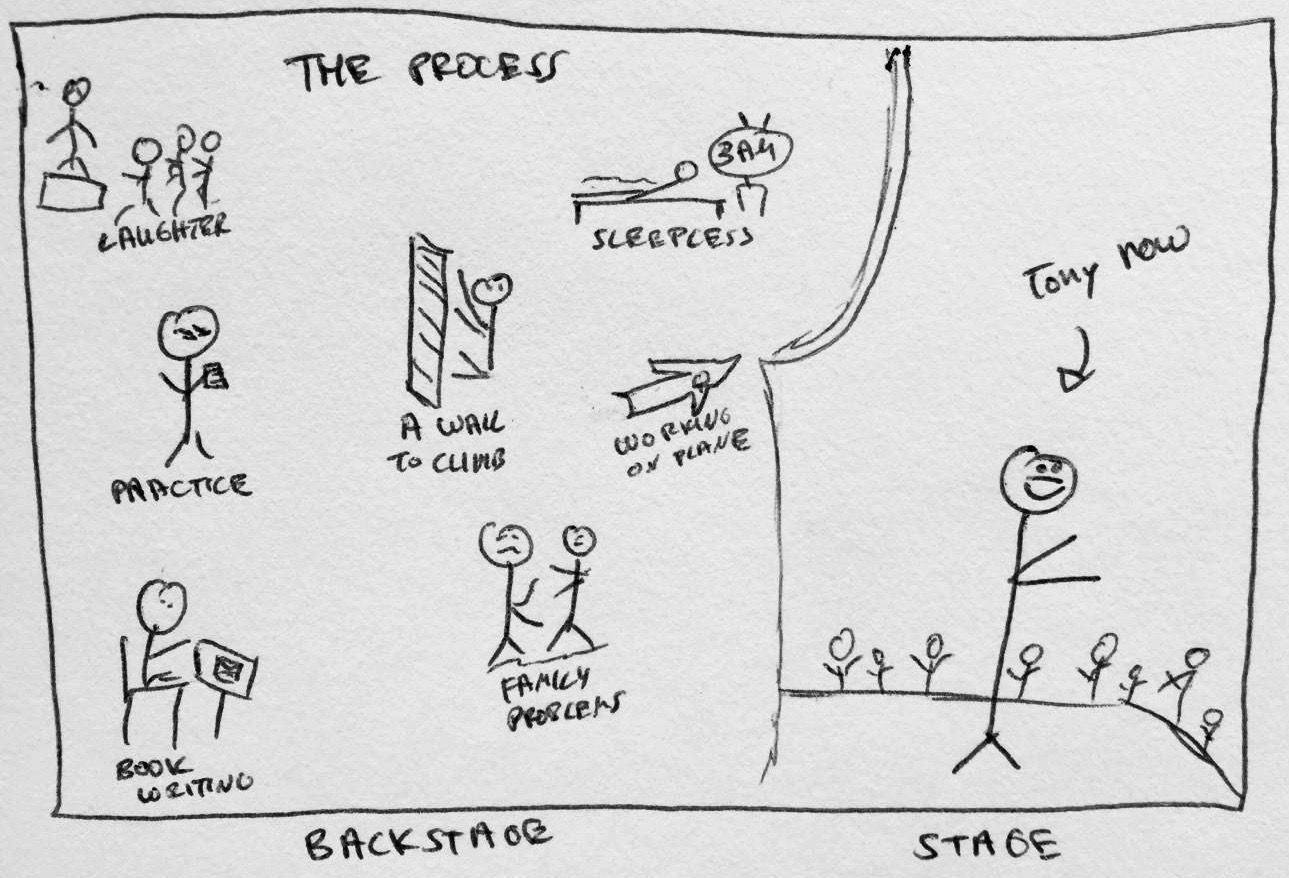
The full image of what it takes to become a speaker.
And most importantly, the hardest path was to find his own calling - to find his glowing purpose that brought him to speak in the first place and become the best at it.
Whenever he felt challenged, he knew why he continued. Whenever he got rejected, he knew what will bring him in. Whenever he felt down, he knew what will bring him up.
Having a clear purpose is key to every success. When interviewing dozens of speakers, most of them knew their main goal (to receive speaking gigs). But most of them didn’t know why in the first place.
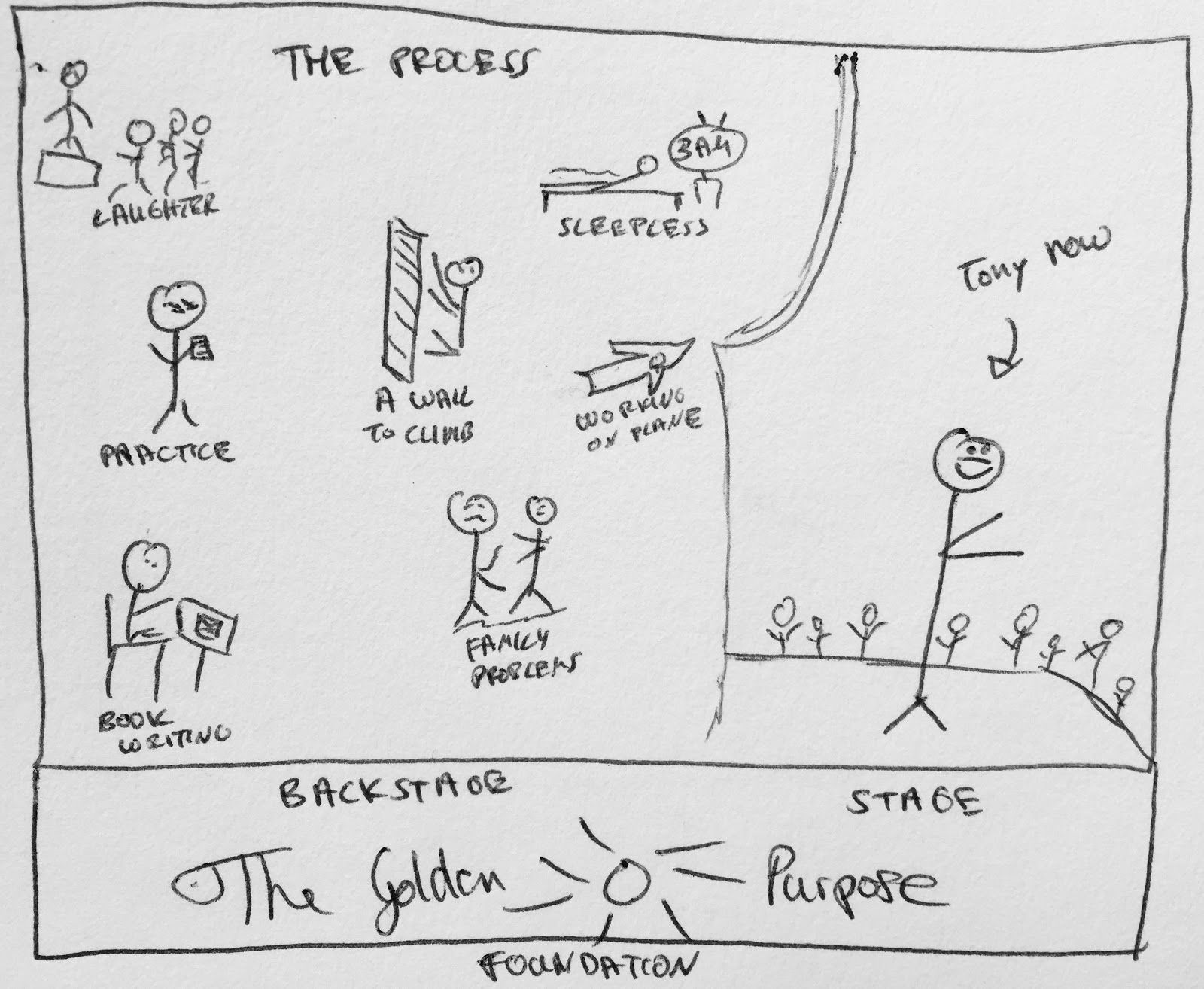
Your own purpose is the only foundation that will bring you to Tony’s place.
Anyone who believes that becoming a speaker will happen overnight believes in the same story as the American Dream - it is possible to climb up the ladder, but the chances are small, and it is not the result of luck, but of hard work, resilience, and smart thinking.
Now, let’s take a step back. How many speaker do you know? Dozens. How many of those are good? A few. And how many of those give you the feeling that Tony gives? Probably close to zero.
Speakers remain mediocre because most of them jump into the journey without asking the hard questions*.* Why do they want to speak in the first place? What do they want to become the best at? How will they give value to the world? What is unique about them that no one else can copy?
It is easy to skip this part, yet it will make the difference between a good speaker and a world leader.
“Hard choices, easy life. Easy choices, hard life.”
- Jerzy Gregorek
Catching Santa Claus
All my life, I’ve been fascinated by asking myself the right questions. At the age of 3, I calculated the size of our fireplace to figure out that Santa Claus can’t possibly walk through - I even had to sneak into my dad’s studio to steal his meter (sorry dad!)
Later on, I started with more severe ones. The question “Why do we exist?” made me choose my own purpose. The question “What is life about?” made me optimize life for my own happiness. The question “What is success?” made me measure myself with my internal values and ethics.
“Life is all about asking the right questions. The answers will follow.”
- Renat Gabitov, CEO @ Prometheus
Today, I start every new challenge with asking the big questions first.
When deciding to run a marathon, the question “What does it take to run across the finish line?” made me optimize my training - and I finished my first marathon in under 4h15min by practicing only four times total (trust me, I had muscle ache for a few days after that). When deciding to optimize for physical energy, the question “What triggers the body to be energetic?” led me to fasting in order to trigger a “fight-or-flight” response in your body, also called ketosis, which brings you into a superman state in less than 72h (check out my article on the 72h fast). The question “How do I get knowledge fast?” led me to join a community of lifestyle engineers to receive and share information rapidly. The question “How can align my life and work values?” led me to become fully nomadic, being able to enjoy the company of the people I love and traveling to the places that my profession calls me to. And the list goes on.

Running the Zurich marathon… above the road
Yet the same goes for my marketing agency. First of, I wanted to create something new that brings fire to the world. Hence, my business partner Renat and I named our agency Prometheus, which literally refers to the Titan who stole fire from the Gods and brought it to humanity. We keep the same goal - taking knowledge and invention from the world’s smartest people and distribute it to the world through marketing. Then, we figured out our core values and desired lifestyle. That led us to build a company with flexible working hours, a culture of celebrating successes (see that lovely dinner we had when closing our first 20k client one year ago) and full remote work (I’m currently sitting in a Paris café while Renat is hanging in Berlin, our copywriter in Barcelona and our main designer in the Balkans).

Renat and I celebrating our success in one delicious Argentinian restaurant in Barcelona
Then, it was time to build actual services that kick-ass. Hence we asked ourselves the most basic question: “What makes great marketing?”. Spending hours devouring tons of knowledge and a couple of months later, we finally found the right answers and are now able to promote the work of 9x NY Times best selling authors (check out for example Steven Kotler, badass researcher on flow states and author of the books Abundance and Stealing Fire), sell million dollar classes for 1M+ reach influencers, and bring first-time speakers to 10k€ speaking gigs.
This is when we put our focus on creating speakers
Over the years, we’ve worked and analyzed countless of speakers to understand why speakers fail, and why they succeed. Regardless of the differences in their backgrounds or targets, the speakers present the same mistakes and failed to understand the steps to success. Through experimentation and interviewing the best in the world, we deconstructed what it takes to be a speaker, and especially, what it takes to be a great one.
Unfortunately, almost every speaker who comes to us for help, does not know what he or she is getting into. And that is why I decided to write this book.
Now it’s your turn to take knowledge into results. And the most important takeaway for you is - you won’t become a top speaker if you don’t start with the right foot. And that is starting with the big questions first.
What you can expect after reading the next 30 pages
I wrote this guide to set you on the path of the exceptional speaker.
First, I will give you a real overview of what it means to becoming a speaker. We will uncover the myths and understand the process of becoming a top speaker - this will save yourself from the most common mistakes that lead to failure.
Second, I will help you to discover your calling and find your speaking (and life) mission. This will be the foundation around which everything else will be built on.
And third, I will show you how to kick-start your speaking career within a week. You will establish yourself in the speaking scene and get your first speaking gig.
A few more questions to clarify:
Who is this guide for? Anyone who wants to become a professional speaker. It doesn’t matter whether you are about to change your career or already make your living out of speaking - if you don’t have the right approach, you will never be better than you can be.
How to use this guide? The book is mostly in chronological order, hence you can go directly to the parts that you prefer. Nevertheless, I encourage you to read it all through - the next 60 pages can fill you with months of action items. I wrote it in a concise style and gave as much value as possible, thus read them carefully. As Bruce Lee said -
“It’s not about the daily increase, but daily decrease”
- Bruce Lee
I also added exercises along the way (they’ll have a 🔥 symbol) and call to actions to share your progress with me (they’ll have a ✍ symbol). And before we jump in, my last advice to you - it’s okay to skip the parts that you don’t want, but don’t skip the exercises. Do them now, not tomorrow, not next week. Don’t postpone your possible success. We included those exercises so that you can get to your goal in record time, and avoiding them will only lead to confusion and despair.

You won’t be like that guy. The exercises exist so that this does not happen ;)
Lastly, if you ever feel stuck - write me. I’m here to help and while I might not respond not overnight (got other fires to extinguish), I promise you to get back to you and help out. Over the next chapters, you’ll be encouraged to write me, so that you can get feedback on what you are doing. Don’t be stupid and keep it to yourself (‘cause I did that in the past) - we’re stronger together, so use this opportunity.
Remember, this is about YOU - it’s time to start investing in yourself and create the life you want.
Ask yourself the right questions, answer them with full honesty, and take action. Most people are both afraid to die and to live fully. Don’t fall in that trap. You have all the tools you need - now, it’s time to work.
“The fear of death follows from the fear of life.
A man who lives fully is prepared to die at any time.”
– Mark Twain
Be exceptional,
Guillaume Perdrix
Paris, May 2018

Even in Paris, optimizing for Frenchness…
Knowing the Path
Have you ever taken the wrong path but didn’t realize it until you hit the wall?
When I interviewed a speaker for our top speaking consulting program last month, the story was this:
“I am ready to become a speaker. I’ve worked hard in my life to acquire knowledge, and now I want to share it. Everything is lined up - I hired a PR agency for outreach, hired a sales agent to get my first client, and I’m already prepping up my speech. I don’t think I need your help because I know how to get there.”
Two months later, he called us back.
“I don’t know what went wrong. I got into newspapers, yet no one reached out. I got in touch with corporate leaders, but they weren’t interested in my speech. I invested half of my savings in all of those competent people but I’m still looking for my first speech. In fact, I’m not even sure what to talk about now.”
Does this sound familiar?
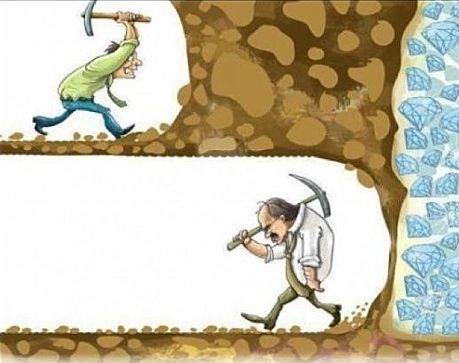
Success can be around the corner if you don’t know the path
Most people don’t know what they’re getting into, and this leads them to abandon the path of success. You hear of overnight success stories, speaking gigs that charge 50k for a keynote and speakers who speak in front of 10k+ people. All of those are true, but you need to know what you will have to tackle along your way.
“A leader is one who knows the way, goes the way, and shows the way.” - John C. Maxwell
I highly believe in the impact speakers can have, both for the audience and for themselves. As a former professional harp player - I was playing for national competitions at the age of 13 - I know that human expression is the greatest individual gift one can offer to others. Unfortunately, many are not able to share their gifts to the world because they don’t know how to proceed. They feel stuck.
In this chapter, let’s shine light on the most prevailing myth that discourages speakers in the long run. My goal is to show you that you’re never stuck - that you might feel to be in a dead end, but in reality you just have to discover the exit to the highway.
Myth #1: Becoming a Speaker is Easy
Most speakers jump into their journey without asking themselves the right questions, without knowing their next steps and without having clarity on what and why they actually want to speak. They have an idea in their head of how to get where they want to, take that path, and hit the wall. This is when reality catches them up.
Becoming a speaker will require hard work and effort. The good news is that you can skip the pain of many failures, if you don’t make the same mistakes as everyone else. You won’t become a speaker, if you don’t put in the time and effort. You won’t be speaking on stage, if you have the wrong motivation. You won’t become successful, if you don’t tackle your fears.
The number one step to achieving your dreams is to know the right process. This process will challenge you to become self-reflective. You cannot wish to accomplish your goals without understanding yourself, your problem, your audience and your end goal to obtain new customers. My goal as a coach is for you to know what to expect. Then, you can make a conscious decision on whether you want to take that path. So let’s have a closer look at what you’re about to get into.
The Path of the Speaker
When analysis the top people and successes of marketing, it becomes apparent that there is a clear pattern behind success. Over time, we’ve distilled every successful person-brand to be based on four core pillars and use those to design our marketing strategies, whether for in-person brands, companies, or one-time promotional campaigns. You will now learn those to apply them to your speaking business. In short, the following areas will be the main domains that you will have to tackle and develop over your speaking career:
Pillar 1: Unique Differentiation
As a top speaker, you will find your niche, develop a unique service and positioned yourself in a unique and authentic way
Pillar 2: Thought Leadership
To be recognized as an exceptional thought leader, you will build your own domain of expertise, become a thought leader in your field and innovate with your own ideas.
Pillar 3: Credibility
To be perceived as a top speaker, you will create ways to create trust with your audience and potential clients, give value before they hear you speak and be validated as the expert in your field.
Pillar 4: Cultivation
In order to grow your speaking career, you will apply efficient acquisition methods, overcome your fear of selling and create recurring streams of income.

The Four Pillars: Differentiation, Thought Leadership, Credibility, and Cultivation
Let’s get concrete and see how this applies to Tony Robbins:
Tony developed a unique style of energetic speaking, direct confrontation, and blanc vulnerability (unique differentiation). He then established himself as the go-to-person when it comes to personal growth and getting unstuck: he developed his own methodology and knowledge (thought leadership). In order to gain trust, Tony wrote many books, worked with the world’s top performers (from Lady Diana to Bill Clinton and Mother Teresa) and created tons of online and offline content (credibility). Lastly, Tony uses his network to work with the most incredible people, creates books, upsells his seminars, upsells his personal coaching, and creates huge promotional campaigns (cultivation).
Unfortunately, not everyone follows this rule of successful marketing. Let’s see how the four pillars are applied to those who are not Tony Robbins:
Remember your friend who gives amazing presentations but never spoke on a big stage? He didn’t focus on credibility. Have you been at a conference with the expert who wrote tens of books but gives the most boring speeches ever? He didn’t create his own differentiation. Or have you witnessed the Youtuber with million views but who is struggling to survive? He didn’t focus on cultivation.
We encourage our speakers to schedule in regular time to reflect on the pillars that need focus - it is only by worshipping each area that you will be able to establish yourself way up.
Climbing the Ladder
Success won’t come overnight and it takes time to build up each pillar. There also isn’t any magical success formula - you will have to tackle the pillars at different times than your speaker peers because we all have different resources and path.
Nevertheless, each speaker has to go through, what we call, the 10 Steps to Speaking Greatness. Those are the core milestones that you will hit over the course of your speaking career to establish yourself on top of the ladder.
Note: Because every speaker has his own path, you might tackle the milestones at different times, and tackle several ones at the same time. The key is to know what you will have to work on.

It’s all about climbing up the 10 Steps to Speaking Greatness
- The Inner Drive**:** discovering personal drives and your inner purpose
- The Positioning: finding your topics according to your purpose and market demand
- Becoming a Thought Leader: creating content to be recognized as an expert in your field
- The Irresistible Offer: testing and validating your services with your audience
- The First Gig: finding, convincing and closing your “early adopter”
- Strong Online Presence: leveraging social media to promote yourself and create die-hard fans
- The Hero Speech: learning how to build a transformational speech based on your topic and your audience
- Rocking the Stage: overcome your speaking fears and tap into your inner warrior
- Cross-Selling: entering mainstream marketing channels to reach a wide audience
- Building a Movement: creating a community of die-hard fans and turning them into brand ambassadors
How would this apply in real life? Let’s have a look at my friend Marjolaine Grondin from Paris. Marjolaine is CEO of the startup Jam, which is France’s biggest Facebook chatbot with more than 300.000 users. Jam helps their users find recreational activities and discover new elements for a healthy and fun lifestyle.
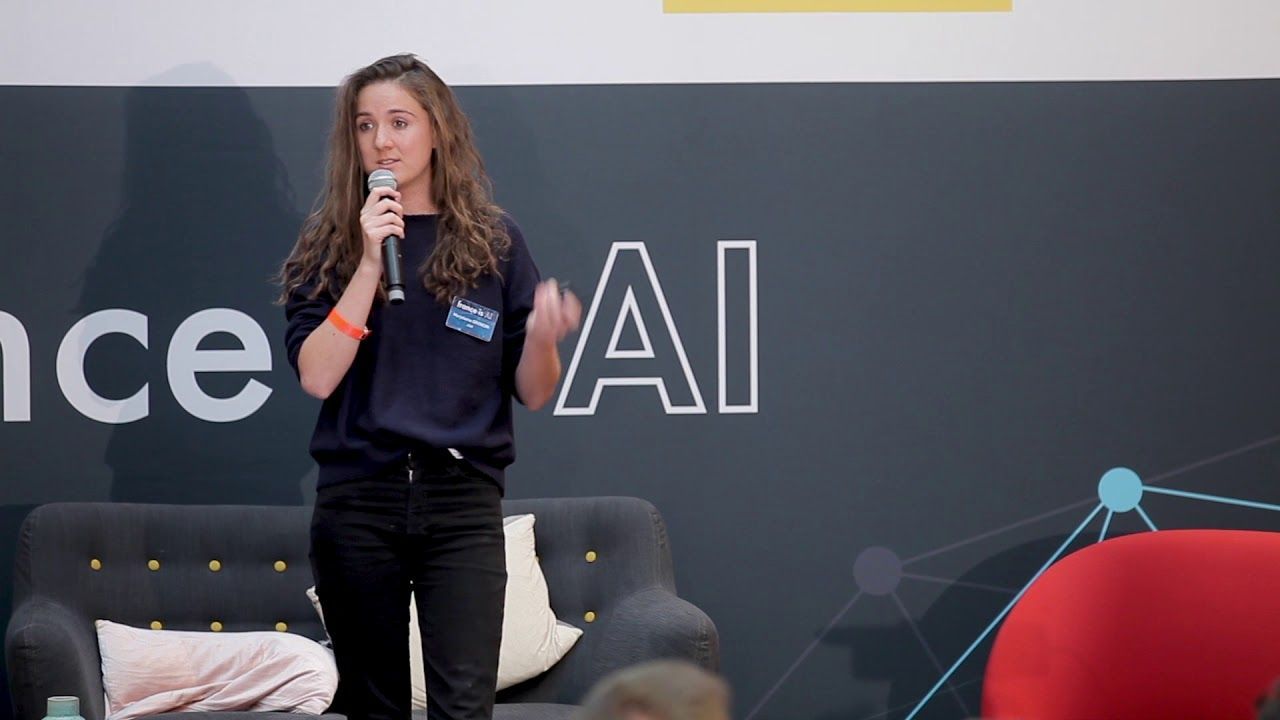
Marjolaine speaking at the French AI conference
Marjolaine originally started with a strong desire to help others spend a great life (The Inner Drive), and quickly developed her own positioning as a female leader in the tech industry (The Positioning). She started giving her first talks in front of investors and startup events (The First Gig), and gradually after attending several big talks, including giving a TEDx talk in Paris, she became recognized as an expert on artificial intelligence in the French tech startup scene (Becoming a Thought Leader). Since then, she has given hundreds of speeches, to everything from small corporate innovation circles to big-ass conferences (such as F8 at Facebook headquarters in San Francisco) and developed her own speaking style (The Hero Speech). With more than 60.000 followers on Facebook (Strong Online Presence), Marjolaine uses her speeches to upsell her company services (Cross-Selling) and leverages her appearance in social media, PR, and real life to create a movement on how to make technology help humans to enjoy life to its fullest (Building a Movement).
Marjolaine succeeded in getting organic speaking gigs (for example, she’s just been contacted to head end of June to China with the Prime Minister) - her issue now is that she has to turn some down. While her path is incredible, she is not living out of speaking only (as she runs her company). Let’s therefore take the other example of my friend Thomas. As a Frenchman, he loves culinary culture, and has been running underground restaurants during his study years.
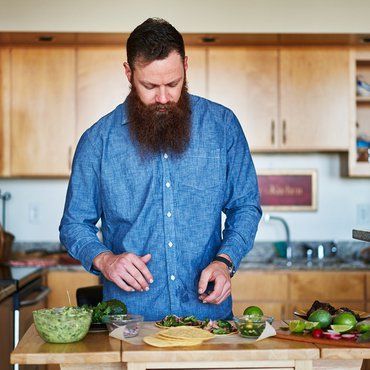
Thomas on a Mexican themed dinner night
Instead of opting for the conventional business career, he wants to become a speaker. Here’s how it’d go: First, Thomas will have to be clear on his higher purpose - namely, to help others tap into their inner creativity by creating new type of dining experiences (The Inner Drive). Thomas will then create a website in a pop style that will blend creativity with innovation (The Positioning). Not only did Thomas already create underground restaurants, but he is also working on a 50-page guide to help cooks overcoming their barriers to create restaurants (Becoming a Thought Leader). After asking in his network of cooks and food entrepreneurs, he will realize that many restaurant creators don’t focus on giving a unique consumer experience. Hence, he will create a one-day workshop to create unique dining experiences without high-cost changes (The Irresistible Offer). Fortunately, one of his dad’s friends is exactly struggling with that, wherefore two weeks later, he is invited to host his first workshops (The First Gig). His best friend is joining him for the day, recording the event in video and creating a lot of marketing footage, which he will use to grow his Instagram account over the next months (Strong Online Presence). In the meanwhile, he got into TEDx Paris and uses his workshop’s feedback to create a strong speech (The Hero Speech). As a friend, I’ll be able to coach him a few days beforehand on posture, speaking, and intonation (Rocking The Stage). The talk is over, and Thomas met many interested entrepreneurs that see value in his way of thinking. At his next workshops, he will promote the book that he wrote, which has a call to action to take his newly created online course (Cross-Selling). Finally, all people who took the course are added to his private Facebook group, in which they share techniques, restaurant improvements, and private event dates. His followers are so enthusiastic about the transformation they went through that they become organic brand ambassadors and share Thomas’ contact information (Building a Movement).

A night at my friend Thomas’ underground restaurant
Sounds great, right?
Of course, things could have gone differently. Thomas could have worked on his presentation style before hosting his first workshop. He could have created an online course instead of a 50-page guide, or he could have created brand ambassadors through his workshops before giving a TEDx talk - but you get the point: sooner or later, you will go through those stage, and it’s going to be your journey to find your own path.
Why do most speakers fail?
Knowing the path is great, but action needs to follow. This is where most speakers suck. Over the years, we’ve analyzed the main failure points of unsuccessful speakers - unsurprisingly, they don’t only apply for speakers: artists, entrepreneurs of all sorts, or politicians fail on those points too. I encourage you to read through them and ask yourself: “Does this apply to me?” If yes, figure out a way you will tackle this point so that you don’t fall in the same trap.
Failure Point #1: Lack of Questioning
We’ve discussed this already extensively in this chapter, but we have to reemphasize on it. Always question what you do. That applies to the bigger picture (such as the Path of the Speaker) but also on the micro-scale. Why am I doing this specific task today? Is this giving me most value back? Is this the most important task or only the most urgent one? What can I do today that will increase my outcome 10 times (check out the 10x Rule by Grant Cardone)?
The same apply when you fail at something. The goal here is to apply a technique called the 5 Whys, formally developed by Taiichi Ohno, the father of the Toyota production system. Whenever you fail at something, ask yourself why five times until you get to the root cause. People often only ask the first “why” which will not solve the root problem.

Taiichi Ohno engineered the Toyota production system by removing root problems
For example, we were working with a speaker who was delegating his sales calls to his assistant. After our initial question, he said that it was because he didn’t have enough time. When we asked why again, he said that other tasks were more important. When we asked why others tasks were more important than him getting a gig on stage, he realized that the real reason was the he was scared. When we asked why he was scared, he admitted that he didn’t want to fail at a sales call in front of his assistant. And when we finally asked the fifth why, we realized that he had sales anxiety.

Sales anxiety was the root cause that we figured out through the 5 Whys Method
You see, we could have worked around his schedule and created more time for sales calls - but that wouldn’t have changed the root cause. What we had to do instead was changing his belief system and removing the fear to be rejected. Once he saw selling as an opportunity instead of a failure point, he was able to close his clients, and eventually delegated this task to his assistant once speaking gigs started flowing in.
Whether it is before starting a task, creating your roadmap, or analyzing your failure - keep on asking yourself why you do what you do, and do that more than once.
Failure Point #2: Lack of Effort
We’ve already seen that becoming a speaker is not an overnight success. Even if you know that path and got rid of your anxieties, you need to put in the effort. You cannot think that “success will come eventually” and sit back - you need to take action.
When we worked with a client who wanted to quit his job and become a professional speaker, we had to squeeze in his working hours in between his job hours. Three months later, he was able to get his first speaking gig and was confident to quit his job. And that didn’t give him time to sit back - it rather opened up time for more work.
That is the opposite of effortless. I’m sharing this with you so that you understand that you will have to badly want this new chapter in your life - and that without action, nothing will follow. Ask yourself - “do I really want that?” If yes, let’s move on and tackle the last point of failure.
Failure Point #3: Lack of Growth
As we’ve seen with our former client above who had sales anxieties, you will come to realize certain fears, insecurities, or lack of skills along the way. You’ll then have two options - repress them, or use them as opportunity for growth. The former will lead to mediocrity, the latter will lead to success.
The truth is simple - you will have to grow along the way. And the best way to make this happen is to review where you are struggling with and create concrete actions points. One exercise we have our clients do is have a bi-weekly fear journal, in which they write down their fears and struggles. It allows them to analyze their situation and create concrete solutions. For example, you might fear to be on stage, or fear that your online funnel won’t work. You will then know your problem and create a concrete solution, such as hiring a speaking coach or working with our sales funnel team. This will remove your fear, make you learn on the subject, and give you independence to tackle the same task with confidence the next time.
For more inspiration on tackling your fears, watch Tim Ferriss’ TED talk on why you should tackle your fears instead of your goals. Whether it is through a fear journal and by hiring a coach you guides you along the way, use this new professional path to grow and become the best at it. Trust me, it’s exciting!
How badly do you want it?
In this chapter, I tried to show you that becoming a speaker is not an overnight success - it requires time and effort. The great news is that you can engineer your path of success when applying the rules of successful marketing (the Four Pillars) and working on the necessary steps to becoming a speaker (the 10 Steps of Speaking Greatness).
🔥 Ask yourself: What questions do you have about the process of becoming a speaker?
If at this point, you still aren’t clear about what to expect, or even whether becoming a speaker is the right path for you, shoot me an email with your struggles and let’s what the solution is - it could be that you should rather become a writer or create online webinars, or it could be that becoming a speaker is the right path, but that your path will look different than the ones describes above.
✍Write me with the subject line “My Path” so that I can get back to you as soon as possible.
Are you ready to commit to your next chapter in life? Then let’s buckle up and start at the first step: discovering your inner drive.
Discovering Your Calling
Have you ever felt lost, having no purpose and no direction to look at? We’ve all been, and I was there too.
It’s March 2015, and I am waking up on my friend’s couch. Three months ago, I finished my life chapter at a great London startup. It was time for me to take on a new challenge, and I had thousand ideas in mind. I started putting my hands into many projects, one more complicated and interesting than the other. And now, three months later, I am looking in the mirror and suddenly ask myself: “What for?”.

When you hit the wall, take a step back
I couldn’t answer the question. This is when I realized that I didn’t do the hard work. I jumped straight into the work of getting busy instead of sitting down and asking myself the “why” in the first place. Only once I got clear on my purpose was I able to get back on track. Since then, business, life and happiness have finally been able to grow.
“If you don’t know where you are going, you will probably end up somewhere else.” * *- Laurence J. Peter
Personally, I consider myself a realist positivist. And I encourage you to do so as well. What does that mean? It’s rather simple: a pessimist is someone who sees the world worse than it actually is. He will criticize it without taking action. A realist is someone who sees the world as it is, which is necessary to analyze information and make right decision. Yet a realist positivist is someone who can see how the world can be better than it now is, and hence will take leadership and initiative to transform to world for the better. What drives those leaders is what they all have in common: a strong purpose to make the world a better place.
🔥 Ask yourself: What is your current purpose that you want to share with the world?
Note: Write it down now. Throughout this chapter, we will dig deeper and find out your real inner purpose. At the end, it’ll be fun to compare whether the two actually match, and you will see the progress you made to building your path of becoming a top speaker.
Figuring out your purpose is the foundation for every success. And it answers the second myth about becoming a speaker…
Myth #2: Speaking is well-paid and will get you rich
From this point on, you have two options. The first one is to become an average speaker who wants to speak for the sake of speaking. You will do it for having the feeling of being on stage, of making a good income while repeating the same story, over and over again. That’s the easy path, and it works for many.
Unfortunately, it won’t lead to greatness. Why? Because you do the same mistake of not asking yourself the right questions first. You will start drafting your first speaking topics, pitch your ideas, even get your speaking career started - until things don’t work out the way expected: you’ll start comparing themselves to others, find it hard to be really innovative on their subject, and spend the next chapter of your life not living to your fullest potential.
Frankly, I don’t want this to happen to you.

Like Obama, we won’t hit the wall, we’ll overcome it (…and no, that pic isn’t real)
So let’s explore the second option, which is to chose to focus on your life’s purpose. As our 20th century genius said:
“Try not to become a man of success but rather try to become a man of value.”
- Albert Einstein
Why is that so important? Because if you don’t focus on giving value, you will never the grow the value you give, and hence stagnate at a certain point. That is what happens with most speakers who repeat the same story over years and become outdated. Great speakers love the problem they’re talking about, and therefore continually evolve, grow, and offer new solutions.
Going the path of purpose gives you the highest satisfaction, and will lead to the highest financial return as well. Becoming wealthy will be consequence, not an end goal. And your value as a speaker will continually grow because you keep on adding value to the world.

Focus on your purpose, and the landscape of opportunities will open up
In this chapter, my goal is for you to discover your true speaking mission, to niche down your topics of speaking and find your true purpose. For this, you will go through the exercises that I coach to future top speakers. This will take around 1-2 hours to go through, if you do the exercises properly. My only advice is to do the exercises as you read, and to do them with full honesty - the only person you can fool is yourself!
Note: If you are more creative with pen and paper, this is the time to print out your guide.
Start With Why
One of the most important concepts in life has been widely spread by Simon Sinek and in his video “How Great Leaders Inspire Action” (if you have not watched it, check it out here).
For everything you do in life, whether your career, relationship, or your new hobby, there are three questions that you have to ask yourself:
- Why do you do it: this is your ultimate purpose
- How do you do it: this is your method
- What do you do: this is your outcome
Most people want to become a speaker to talk about a certain topic, yet don’t understand their “why”. Remember the easy path of becoming a speaker? Most speakers start with their topic, then figure out how they will reach customers, but eventually they’ll get stuck because they’re not set up to give value. In short, they are aligned with their inner core.
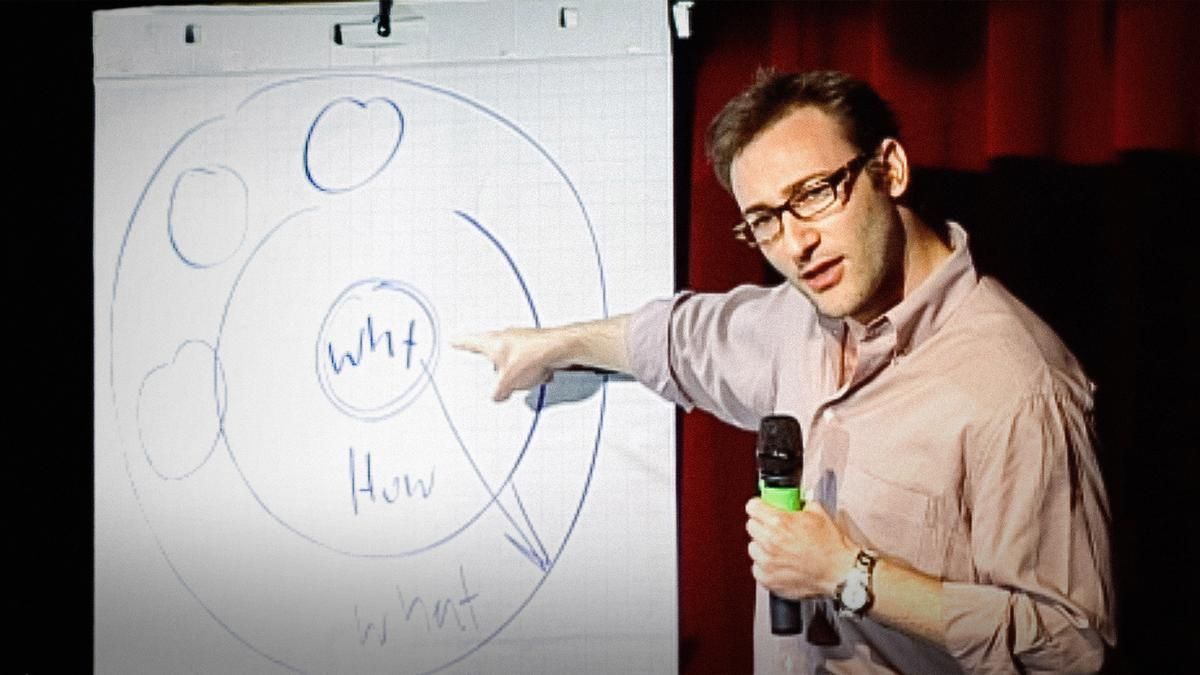
Simon Sinek explaining his Why - How - What concept
Let’s see how this applies to me. My purpose is to enable anyone to live a life aligned with his highest purpose (this is my Why). Once I was clear on that, I decided to share my methods through online and offline contents (this is my How). Combining the two, I realized that the best way to do it is to create a guide on how to become a top speaker for ambitious individuals in the search of self-actualization (this is my What).
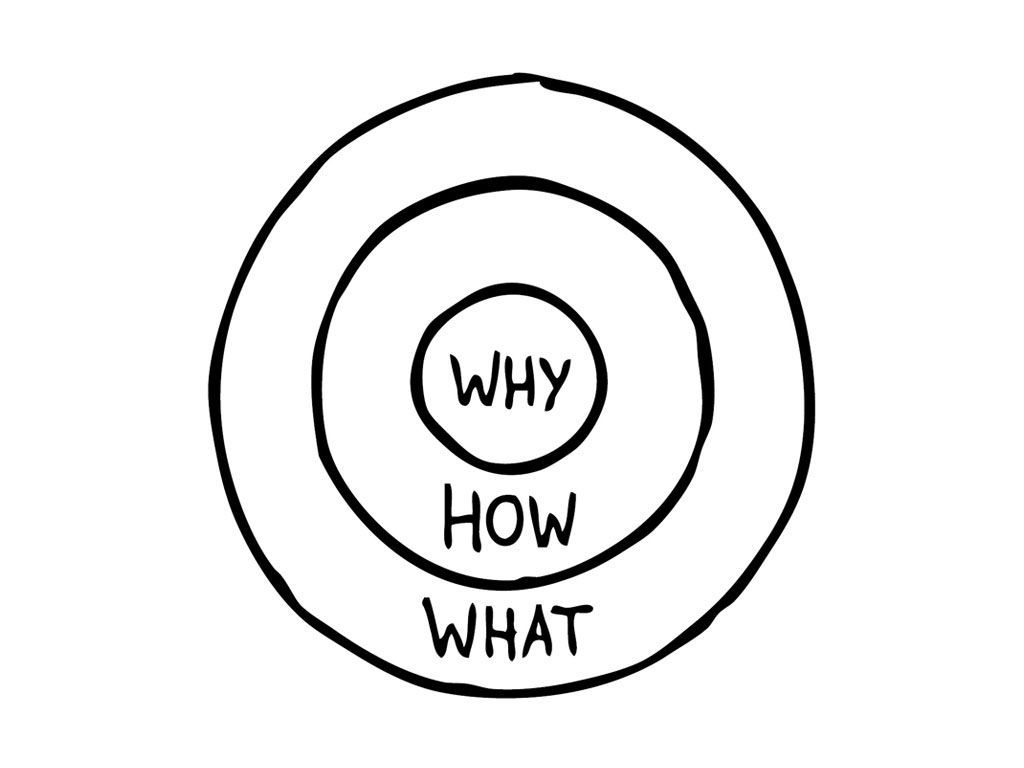
Thinking inside out: starting with the purpose first
Or let’s check out Tony Robbins (by now you probably realized that I kinda like this guy). When Tony coaches high-impact individuals, he does it because his purpose is to help people becoming their highest self (this is his Why). Over the years, he discovered that the best method is to help people find their inner drives and overcome their limiting beliefs (this is his How). And that led him to organize massive transformational events and share his knowledge through several books (this is his What).
The point is simple: being a speaker is your “how”, not your “why” - it is only a method to deliver a certain message (your “what”). The real challenge is to find your purpose first, so that you can find the topic that will keep you going, growing, and killing it on stage.
Got it? Well, time to find your purpose, my friend!
Defining Your Value and Purpose
We are best at teaching what we care - and which problems we have overcome in the past. In the following exercise, list all the ways you believe you can help others. Don’t get into details and write down the ways that you truly believe you can add value to other people’s lives.
Include the following
- Specific skills that you’ve learned in the past
- Problems you overcame in the past
- Solutions that you have to other people’s problems
For example, one of our first clients was a former professional bodybuilder, who then created a travel agency in Africa and spent his forties as financial adviser. When we first talked to him, he was able to speak about dozens of topics, from motivation and goal-setting for athletes, to overcoming cultural barriers in work relationships, to creating financial structures that grows businesses in the long-run. We then had to narrow it down to find the core purpose and create a strong speaking topic.
When I did the exercise, the following came out:
I, Guillaume Perdrix, can help you:
- Build a strong personal brand that will generate speaking offers
- Develop an award-winning website (AKA online funnel)
- Grow your social media to 1mio+ followers
- Overcome your fears of speaking and selling
- Gain daily clarity by creating a strong morning routine
- Get rid of deep anxiety by discovering unconscious limiting beliefs
- Create a strong speech that will be shared organically
- Feeling aligned and energized by gaining clarity on your life’s purpose
- Write 4k+ words academic papers in less than 4h time
- Find acquisition strategies to increase your business growth by 200%
Your turn!
🔥 Write down ways you can help others: “I Can Help You…”
Note: Mind-mapping can help you discover more topics. If you don’t know how to do a mind-map, check out this resource from Zapier on mind-mapping. In short, follow the following steps:
- Set yourself a short set time (5 to 10 minutes are enough). The goal is to be creative and intuitive, wherefore you don’t need to spend three hours agonizing on your ideas.
- Take a blank sheet of paper (or do it online with softwares such as MindMeister, MindMup or my personal favorite Coggle) and write your core topic (“My Acts of Value”) in the center.
- Start identifying big topics and write them around the main topic (for example “Marketing”, “Personal Development”, “Soft Skills”, and “Music”).
- Brainstorm sub-topics to each of those main topics (for example “Lead Acquisition”, “Personal Branding” and “Speaker Consulting” around the topic “Marketing”).
- Once you wrote down all your ideas, take a step back and chose the 10 core skills that you can do best, or that fulfill you most.
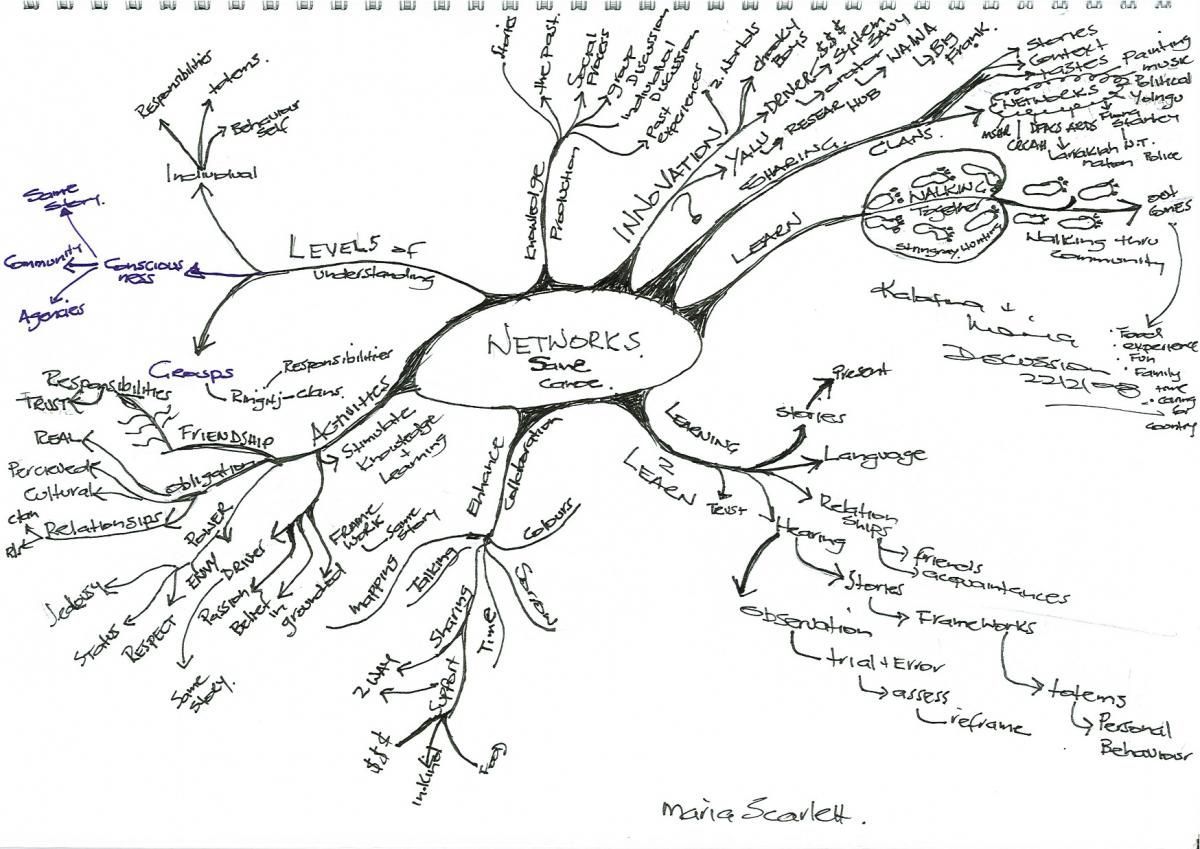
Example of a mind-map - no matter how bad your writing, just get it out there!
Amazing! You now have a list of acts of value you can help others.
Now, it’s time to narrow down.
Ask yourself: which acts of value…
- Are giving me most joy?
- Am I most passionate about?
- Am I excited about?
- Are most aligned with my life’s mission and values?
- Are inimaginable to live without?
- Am I mostly looking forward to help others with?
Try to first be intuitive. If you are then still hesitating, go deeper and play out each scenario. What resonates most with you?
🔥 Review your answers and chose your favorite 4 acts of value:
For me, it was clear - after narrowing down what I love doing and what I do best, it was clear that my four acts of values were
- Build a strong personal brand that will generate speaking offers
- Feeling aligned and energized by gaining clarity on your life’s purpose
- Find acquisition strategies to increase your business growth by 200%
- Develop an award-winning website (AKA online funnel)
What are yours?
✍If you are having an issue choosing your core acts of value - then first, take a break and let it sit on you. Ask yourself the questions above and think about what suits best with your core. If you still can’t figure it out, send me your acts of value with the subject line “My Speaking Topics” and let’s discover together the right questions to ask.
If you didn’t have any issue - great! But hold on - why did you chose those?
You chose them because you have a strong desire to perform those acts of service above others. Those are the ways you can help others that create excitement and a sense a purpose. Those are the ways you can help others that motivate you most.
Understanding your inner drive is the most important motivation to build a great service. And it will lead to understanding your purpose. It’s time to tackle your “why”.
🔥 Write down why you chose those acts of value:
Act of Service #1: (Why)
I consciously chose this service because I believe…
Act of Service #2: (Why)
I consciously chose this service because I believe…
Act of Service #3: (Why)
I consciously chose this service because I believe…
Act of Service #4: (Why)
I consciously chose this service because I believe…
Perfect! And now the last step:
Out of all the acts of values you created, write down the one that excites you and motivates you most - the one that you believe will contribute most to the world, that will make you most fulfilled, and that will create the highest level of euphoria.
🔥 Restate your main act of value and why you want to perform it:
I consciously choose to serve humanity through a purpose-driven act that is explained best as…
Because I believe…
If you found it - CONGRATULATIONS!
And if you didn’t - that’s fine, too. Take a step back. Ask yourself again what is most aligned with your highest purpose. In Japanese, there is a concept called Ikigai - the inner life purpose. Look at the image below and ask yourself: from those four acts of services, which one comes closest to the middle?
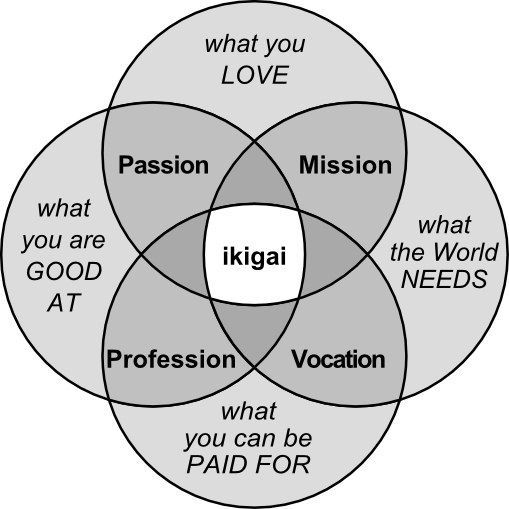
The concept of Ikigai, a Japanese term meaning “reason of being”
When our clients are struggling choosing one topic, or hesitating between two, then it might be there there is a new interface offer to be created between the two. For example, I love created award-winning websites AND create strong personal brands. But as you’ve seen, creating a website is part of the personal brand process - which is why I’m focussing on building personal brands first, and have websites follow.
✍If you’re really feeling stuck and can’t chose one, shoot me an email with the subject line “My Speaking Topics” and tell me about your hesitation. You can also run your ideas by your friends and relatives - it often helps to get inspiration from others.
Not only have you found out your leading topic, you also know underlying purpose. People call it “life mission” for a reason - it will be your mission for your activity as a speaker.

Now that you know your path, the only one who could hold you back is yourself!
(picture taken in the streets of Tulum, Mexico)
From my own experiences with speakers, it is crucial to remind yourself why you do what you do. Here are a few tips on how to make the best use of it:
- Whenever you feel out of motivation, come back and look at why you started originally
- Print out your main motivation and hang them about your office
- Share them with your closest friend or accountability partner
- Change your desktop image to your main motivation
- Repeat your life mission in your daily morning routine
- Write it down and write about it whenever ideas show up
My friend, you are a rockstar. I’m serious. Most people will never ask themselves those questions, and hence will fail to create true greatness for their speaking career.
What did you chose?
✍Let’s now review what you figured out. Send me your 4 acts of services and your main act with the subject line “My Speaking Topics”. Not only am I curious what you will be getting - but you’ll have me as accountability partner to continue and ping you on your journey.
Now that you are clear on your why and your what, it’s time to take action: let’s discuss how to get your first speaking gig!
Hacking Your Way Onto Stage
Have you ever wanted something so badly that you took creative shortcuts to get where you want? Taking the most direct path to where you want to be is what I called “hustling”.
Let’s go back in time. It’s August 2016, and my business partner Renat has just hustled his way into a San Francisco tech event. A bunch of personalities are walking around, until his eyes catch the man who is talking to one speaker after another. That must be the event organizer. Renat runs over, mingles into the conversation, and hears the magic words “remote working”. That’s his time to shine.
“Oh, that’s such an interesting topic, and yet a bunch of nomads don’t know what to expect. I just launched an online course that is helping those folks to navigate in the digital nomad jungle!”
“Amazing! How did it go?”
“Really great. In fact, I bumped into a few people here who wanted to become nomads. And I just thought - wouldn’t it be great to fill in a small break with a 5 minute speech on that topic? I think a lot of folks here could benefit from it.”
Five seconds pause. “I think that’s a great idea. What about the next break?”
“Down!” And that was it. Thirty-five minutes later, Renat was improvising his speech on nomadic living and promoting himself on stage in front of dozens of social media influencers, VCs and startup founders.
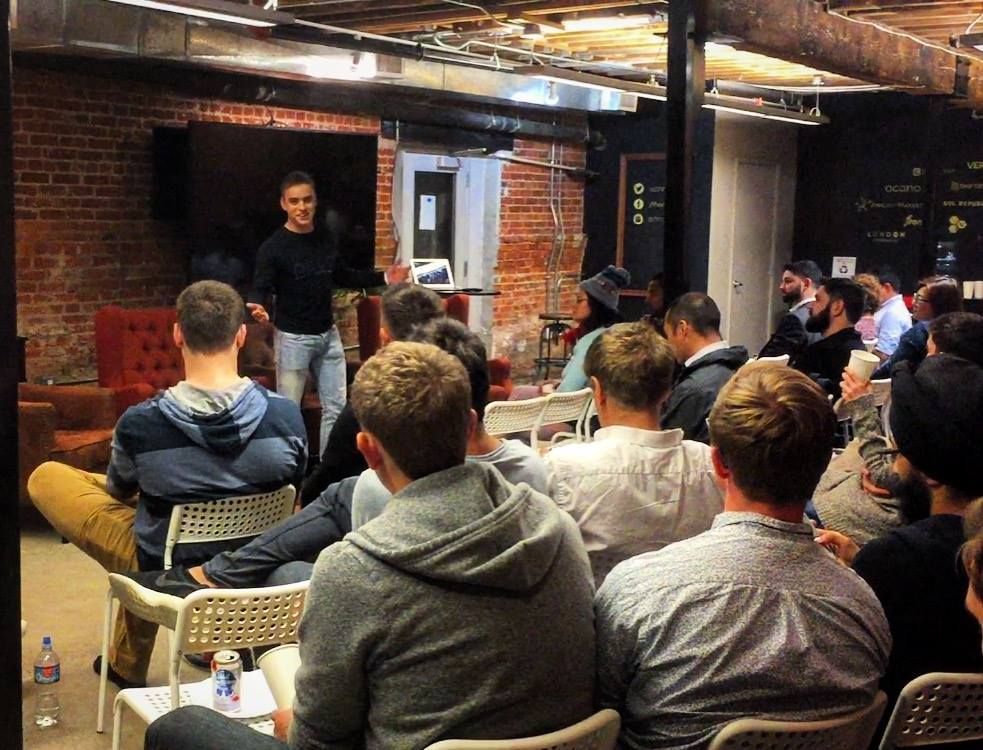
Renat improvising his digital nomad speech (did you notice Dan Bilzerian on the right?)
On another day, my friend Leon was in Barcelona for Mobile World Congress (MWC, the biggest mobile and tech event in the world). Two weeks before, he finds the main organizer on LinkedIn and shoots him a message. No response. One week later, he tries again.
“Hi Daniel, I’m reaching out as I’m currently building a new HR recruitment app with more than 20% retention in the first version. Would love to share my insights on lean product development at MWC.
Would that be of interest?
Cheers, Leon”
Still no response. Until, two days before the inauguration day, he receives the magic email:
“Hi Leon, one of our speakers just cancelled and we have a spot for you. Can you come and talk on Sunday at 3.30pm?”
Boom! Two days later, Leon was speaking in front of hundreds on product development, techniques, and pitching his app. He went there without any expectations and left with a handful of new clients, 350+ new Twitter followers, and two future speaking gigs.

The Art of Hustling is nothing else than taking the most direct path
Which brings us to the final myth of this book…
Myth #3: It’s hard to get started
One of my clients took a two-month speaking program. At the end of the program, almost none of the so-called “future speakers” had a speaking gig. Why? Because they didn’t know how to tackle it.
As I tried to show you above, speaking on stage is not difficult. There are thousand of event organizers looking for qualified speakers. There are hundreds of events in your city this week to which you add value. What it takes to speak is finding the fastest way to put yourself into the Speaking Gig Formula:
Speaking Gig = Giving Value + Talking to Decision-Maker + Overcoming Objections
Most speakers take months to have their first speaking gig because of not following this advice. They try to sell themselves instead of providing value. They talk to assistants who don’t have a decision-making power. Or they contact decision-makers but have not built any credibility beforehand. At the end, they sent dozens of emails, failed to convince their potential client, and wonder why they weren’t able to speak.
Again, I don’t want this to happen to you.
In this chapter, my goal is to show you how to discover your audience and the right people to contact. The goal will be to hustle. As my friend Thomas Despin described it in his famous Medium post What it really means to hustle, hustling is “about becoming who you are meant to be, and to do it in the most efficient way, for you.” Let’s now find the path of least resistance - the path that brings you highest outcome with minimum input. We’ll then establish how you can overcome objections of buying by creating credibility. Finally, we’ll explore some hacks to get your first speaking gig without any marketing budget or external help.
Step 1: Discover Your Audience
The first goal is to find the right audience for your topic. Pitching your service to the right audience is key for success. In marketing, we call this audience a niche. Finding your niche is the starting point. A niche is an audience that is not saturated with other offers, that is adapted to your act of service and that will most likely book you.
In order to become successful at selling a product or service, look at the following success formula:
Financial Success = Give Value + Solve Problem for a Niche
You have your act of service - but who will that be helpful for? Will it be entrepreneurs, corporate leaders, students, artists, or sport club members? How old are they? Where do they live? What are they passionate about? What are they struggling with?
These are all questions you will need to answer. In order to have a great demand from the beginning, you have to find your niche.
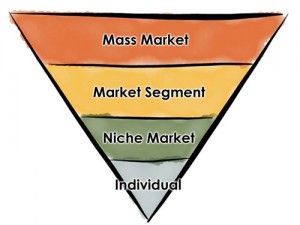

This “cat astronaut backpack” is weird as hell, but a perfect niche example: it appeals to a clear audience (“cat owners who love hiking”) and has a clear value proposition (“hike with your cat”)
One of the main speaking topics is motivation - you know it yourself, there are many speakers who give motivational speeches to entrepreneurs at big startup conferences. That is an opportunity to stand out by specialising. For example, you can talk about motivation to artists who want to become financially independent and who end up speaking at art festivals.
In the case of Marjolaine, who runs an artificial intelligence startup, she discovered her niche after several talks: instead of giving dry, informational speeches on how artificial intelligence will soon dictate our lives (there are plenty of speakers on this subject, from Oxford Professor and NY bestselling author Nick Bostrom to tech futurists and film producers like Gray Scott), she gives talks on concrete, real-life AI applications, mixing in humor and personal stories as a female tech founder. That helps listeners and companies get inspired by what is possible and change their strategy to adopt real AI applications in their services (and, of course, they will contact her to do so).

Marjolaine found her right positioning, on which she can sit on after having established herself
In order to be successful, you to find your niche audience, and then continually adapt your act of value to your niche. First things first - you don’t have to find the perfect audience from the beginning. And that is totally fine. The more you will interact with people, the more feedback you will receive, and the more you can find your true audience.
Let’s put the words in action. Over the next days, your objective will be to find the audience that resonates most with your message. Here’s a simple process on how to do exactly that.
🔥 Write down a few potential audiences that you believe will resonate with your message.
Note: The more concrete you get, the better will you will be able to target your audience. For example, if your speaking topic is “Boosting Creativity”, don’t write down “Artists” as an audience; rather, split it up between “Art students preparing their final exam” and “Established artists with national exposure”.
🔥 Choose three audiences you believe will be a good fit for your service.
My Audience #1 is
My Audience #2 is
My Audience #3 is
🔥 Run your value proposition through those audience and collect data on how they react.
The goal is now to validate which audience wants your service with audience tests. The easiest way is to conduct customer interviews with people who are part of those audiences. When conducting interviews, try to answer the following questions:
- Are you solving their problem?
- Do they have enough pain to want to work with you?
- Are they able to pay you?
Those interviews are best via phone, but there are other ways to collect data. Here are several ways to conduct those audience tests. Chose the easiest ones for you and test each of your three audiences:
- Call up people from your network who are part of your audiences
- Ask friends to introduce you to their friends who are part of your potential audiences
- Contact second or third degree connections on LinkedIn
- Run small-budget Facebook Ads to analyze the engagement
- Email community managers or organization manager and ask about their needs
- Be creative - post questions on Quora, ask other speakers for their opinion, or do searches in Google Trends on your topic
🔥 After comparing the responses, chose the audience that resonated most with your service - this from now on will be your niche!
✍Most speakers encounter the problem of not being creative enough with audiences, or not knowing how to test them. If you are stuck on either of them, shoot me your problem with the subject line “Finding My Audience” and I’ll review it asap.
One last fact on audiences before we start reaching out: over time, you will also collect a lot of feedback from your customer interviews. I recommend to have a space dedicated to feedback so that you adapt your service and content to better solve your audience’s problem. Know that the audience will also evolve over time. For example, my friend Alexandre Dana, founder of LiveMentor.com, France’s biggest online learning platform, initially appealing to students who were struggling with economics classes. Over the last three years, he gradually evolved from this niche to now focus on massive masterclasses for freelancers, techies and entrepreneurs. It was through user-feedback that he was able to expand his market and adapt his offer according to his core audience - and you will experience those changes as well.
Step 2: Create Credibility Before Reaching Out
You know what type of audience who will pitch your services to. But you haven’t had any speaking experience yet. What can you do?
In the Speaking Gig Formula, the last part is called “Overcoming Objections”. The major objection that people will have to get you on stage is that you don’t have any credibility. Therefore, it is important to position yourself as an expert and thought leader before reaching out for your first speaking gig. You need to create proof that you know what the heck you are talking about.
Building credibility can be a long process, as it ranges from getting testimonial to being featured in press or TV. Fortunately, there are faster ways to hack credibility through smaller steps.
🔥Pick 2-3 actionable items to build credibility
- Update your LinkedIn account and describe yourself as an expert in your field
- Write a few profound or meaningful articles on Medium
- Have someone build your website, or build it yourself with Strikingly or Squarespace. Even a simple one-pager is better than no online presence
- Appear on someone else’s social media channel: maybe you know someone who runs a podcast, or a Twitter influencer who will retweet your content
- Write a short guide or ebook on your topic (this is what we did here 😉)
- Create a speaker sheet that you can send to potential clients (see this template)
Note: You choose how much time you want to spend here - our recommendation is to at least have one or two items done before reach out to your first client. Ask yourself - “what are the items that will give me the highest output for minimum input?”
One other fact on building credibility: the process can seem long, but doesn’t have to cost much time. For example, my friend Thomas Despin has been writing 15-30 minutes daily for the last year, and is now one of the most acclaimed writers on Medium in the business category. My other friend Antonin Archer built France’s #1 podcast on Soundcloud and Spotify in less than one year, simply by publishing great content every week. Fact is: starting small is advantageous if you continue writing and giving value. Therefore, there’s only one core rule to building credibility: create, create, and create.
Step 3: Get Your First Speech
Speaking for the first time on stage is an important moment in your life. It will give you the proof that you can actually give value. It will boost your confidence, be a big part of your learning process and lead you to new opportunities.
As I told you the story of my friends above, getting a time on stage is all about convincing the relevant decision-maker. Decision-makers are the people who have the authority and means to accord you a stage present. Those can be company CEOs, event organizers, fundraising presidents, and so on.
So, how will you find your first speech?
🔥According to your niche audience, research and make a list of relevant organizations
Example: If my niche audience are “tech digital nomads”, then I will find “tech and kite surfing meetups”
The next step is to connect with the relevant decision-maker is those organizations. You might think that high placed people are not approachable - that is often wrong, and we often don’t reach out to top people because we are afraid to get rejected. For example, two years ago, my friend Alex Zhang was running the Blackstone Lab, a business center at the University of Southern California. He wanted to inspire his fellow entrepreneurs by bringing in top leaders in the startup field, so he decided to write Elon Musk a simple email:
“Dear Elon,
My name is Alex and I’m running a business center at USC called Blackstone Lab.
I’d love to inspire my peers by exchanging with top entrepreneurs from California, and wanted to ask whether you would be able to join us for a private dinner event. It would be within a small circle, with no press or pictures, and focussed on simple human exchange to help others expand their mindsets.
We would be more than honored to count you with us. Would that be possible?
Respectfully yours,
Alex”
No response. And then, three months later, an email arrived in his mailbox:
“What about next Thursday 6pm? Elon”
The deal was set. Even the most busy and successful entrepreneurs are reachable on their standard email. Elon Musk was the perfect proof for that. And Alex’ story isn’t the only one out there. Read the book The Third Door by Alex Banayan to get more inspiration and see how this young college student was able to meet up with Bill Gates, Lady Gaga and Tim Ferriss by persistently reaching out and overcoming his fear of rejection (it’s a great read, trust me). Lesson learned - don’t limit your thinking, just make the list and start reaching out. Now it’s your turn:
🔥Connect with relevant decision-makers in those organizations. Here are a few ways how to do it:
- Use your direct network first
- Connect (or ask for introduction) to your second degree network
- Use cold emailing to get in touch with people outside your network
- Contact your local TEDx or regional events
- Call the organization directly and ask to speak to the main decision-maker
- Contact organisations that don’t think about speakers in the first place: NGOs, schools, charitable foundations, or Verbände in Germany
✍Reaching out is easier than you think, but the format has to be right. If you are currently hesitating on how to write you reach out template, shoot me an email with the subject line “Getting My Speech” and we’ll figure out together how to approach your list.
Once you are in touch with the decision-maker, it’s time to make a deal.
Step 4: Close the Deal
Before reaching out to the list of people you create, you might ask: how will I price myself?
Here is another advice that not many people give: your first speech can be done for free.
Don’t panic. That doesn’t mean that you are not valued as a speaker! It means that now you have an opportunity to test drive your speech on an engaged audience and the attention of a hundred decision-makers, whom you’ve already provided value for. It will simply be easier to first speak for free so that you can have access to all the benefits listed above without even paying anyone!
The point is not to get paid now - it’s to close now to get paid later.
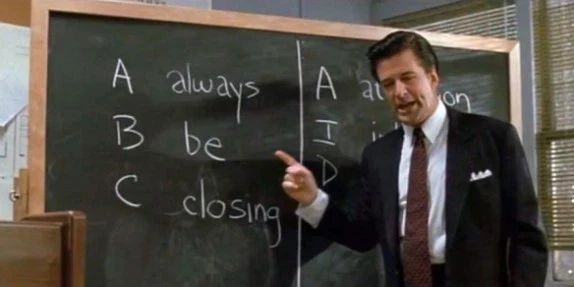
(If you’re too young to know the scene from Glengarry Glen Ross, watch it here)
One great way to get new clients is what I call the “lottery method”.
🔥Get free speaking gigs through the lottery method
How it works: you contact potential clients under the pseudonym of your (non-existing) assistant and tell the company / organisation / event that they have been chosen to receive a speech from you. The goal is to create credibility, exclusivity and scarcity in the offer. If the company says “yes” or “is interested”, then ask to schedule a phone conversation with yourself and promise to follow-up with more information in between. This is how the call can go:
“Hi there, I’m Thomas, assistant of Guillaume Perdrix, an international speaker and expert on well-being for entrepreneurs. As part of our yearly charitable projects, we have chosen [Organisation Name] to receive a free speech because [Why Organisation Is Awesome].
I’m currently filling up Guillaume’s calendar and wanted to know whether you would like to schedule a talk on [Your Topic]. Would that be of interest to you?”
It’s that simple. And if you feel confident enough to price your first speech, then go for it!
🔥Tips to negotiate a priced speech
- Know your value: it’s better to charge more and then give a discount than fearing to be rejected and being underpaid
- Offer discounts as a tradeoff against video testimonials or referrals
- Offer a discount on your speech as an exchange of selling a fixed amount of your content (books, follow-up masterminds, online classes, etc)
- Create speaking packages in which you offer discounted rates for several speeches
Worst case scenario, you can offer a free speech in order to test future collaboration - or simply abandon this method and try the free method. Either way, it is a great practice - and you can only win from it!
Lastly, there are some general rules to succeeding in selling yourself. Here are the top advices we recommend to our speakers when they get on the phone:
-
Write down your speech beforehand: it’s easier to have a sales call if your speech is written out in bullet points. This will give you confidence to walk the person through and give him the right incentives to book you.
-
Ask questions and let the person speak: it is important to lead the conversation, but you shouldn’t be the one talking all the time. Ask your potential client questions such as “What are you currently struggling with?” and dig deeper into his pain point with “Tell me more about your problem”. The goal is to be active, not reactive. It also helps to meditate before your call to be in an open-minded and relaxed mood.
-
Practice the 4-Question-Close: made popular by Russell Brunson is his amazing marketing book Expert’s Secrets, this closing technique is based on four questions that will make the potential client work with you. First, you ask them why they want to solve their problem (“Why do you want your employees to be happier?”). Then, you confront them by asking why they aren’t currently having it (“Clearly, it seems your employees aren’t happy. What’s on your way?”). Next, you ask them resources they are not utilizing to their fullest potential (“What could you change in your company now?”). Finally, you ask whether they finally want to change through your help (“So I only have one more question. Do you want me to help you make this happen?”). This is a great way to show your expertise, make them desire a change that is in sight, and establish you as the expert in charge.
-
Reject a client if it’s not a good fit: it might seem counterintuitive at first, but people will want to work with you if they feel rejected. Why? Because it will give you more exclusivity and increase your value - the message will be that you don’t work with anyone, and that you are selective on who to work with. Telling your clients openly that it might not be a good fit makes you honest and transparent, and transparency creates trust. We won clients by first rejecting them, giving them space to rethink on the offer made and having them come back to us (of course, that doesn’t guarantee that it’s a good fit, and we often still reject based on our criteria, yet it gives you more power on the relationship you build and increases your chances to being booked).
✍Are you having problems closing a deal? Sales anxiety can be an issue, as well as the wrong sales script. Remember our client who was delegating his calls to his assistant? We showed him this sales anxiety video, which helped him change his approach to selling. If you’re still struggling to close, write me with the subject line “Getting My Speech gig” and let’s have a 10 minute call to run you through how you pitch yourself - remember, everything is trainable.
Step 5: Make the best out of your speech
The first speech is very important because you can leverage it in many ways. Remember how my friend Leon spoke on stage of free and then ended up with new clients? The first speech is not only about making your first income. It’s about utilizing it so that you can get more speeches in the future.
🔥Make sure to get the best out of your first speech
- Collect testimonials from your audience to use it on your website or marketing channels
- Capture images and videos for future marketing footage
- Build a relationship with your audience and collect referrals to find your next gigs
- Create your first fans who will follow and support you
- Find clients for other side-businesses (such as coaching or consulting)
- Record yourself to learn from your mistakes and improve your speech
This is it. By now, you should have all the tools to know your audience, build credibility, know the purpose of your first speaking gig and have methods to approach sales. Don’t be discouraged if it takes longer than expected. Keep reminding yourself why you chose this path and take full responsibility for it.
We promise you, the results will pay off.
Some Last Words Before You Go
In my life, I have been blessed to work with talented and driven individuals in various life areas. Back last year, while living in my co-living space in Mexico, I had the incredible chance to meet Nico, one of the most talented videographers I know. On our first meeting, he told me the story of Diego Dreyfus, who was holding personal development workshops around the country.
When Nico saw him speak, he thought instantly: this guy must be famous! A quick look at his social media page proved him wrong - although his speeches were transforming the lives of his audience, Diego only had a couple of thousand followers on Facebook and Instagram. This is when Nico stepped in, created simple but straight-forward videos of Diego’s speeches, and his following grew above 1 million within the next six months. Now, Diego is the Tony Robbins of Latin America, working with thought leaders across the world, impacting thousands of people’s lives through social media, and currently working with us to launch an online university on personal development.

Diego’s videos, often shot on his rooftop with beautiful backgrounds, made him go viral
When I talk to my clients, I can see that they all have a huge potential, and yet many of them are by far not at Diego’s level. The moral of the story is that you can be great at what you do (such as giving speeches), and you can know where you’re heading (such as impacting X amount of people), but you can’t win the game by yourself. You need to build your team.
We all have our genius zone. For me, it’s coaching and seeing marketing opportunities. For Nico, it’s creating emotional and viral videos. For you, it’s speaking and sharing your message. Yet if we want to be the best at what we do, we need to capitalize on each other. We need to combine the genius zones.
As a future top speaker, you will encounter times of lows and of feeling stuck. The truth is - that is a normal phenomenon, and it happens because you can’t be great at everything. The key is to work with the right people who can get you unstuck. Work with stage coaches to improve your body posture. Hire a personal assistant to handle your sales calls. Have a marketing team build your online funnel.
The only way to grow is to become the best at what you do. For the rest, have other people help you.

Remain in your genius zone, outsource the rest
In this guide, my purpose was to offer you the first steps on how to pave your path to fulfilling your dream of becoming a speaker. You learned to set the right expectations, to discover your calling, and to use the fastest ways to speak on stage. The next steps will be to grow your speaking business, market yourself better, and develop a unique positioning that will make you pop out of the masses.
Throughout the past years, I have worked on a process called the top speaker program. It is the summary of best speaking practices with the success formulas of marketing. The goal is to help people
- Adapt their positioning and narrow down their niche to a die-hard fans audience
- Develop an authentic speaking brand that creates controversy, attention and pops out
- Create own content in different formats to impact more people
- Be featured in press, podcasts, TV and social media as a high-impact speaker
- And upsell different products and create several streams of income to reach abundance
I’m proud that you read until here and that you are committed to take the path of a speaker. Now, I’d love to help you get further than that, and to fulfill my life’s mission of helping you to live your life on your highest potential.
It’s your turn. Tell me who you are, where you’re at, and what you need to get further. Explain me your main problems, and what else you want to know (your ideas will be the inspiration for my next book, help me on this one). However you contact me, I’ll promise to get back.
This is it. You now have all the information you need to move on.
Oh, and one last thing. I just can’t repeat it more. Success is simple if you remain honest to yourself, be strategic, and overdose your audience with value. Focus on your purpose, and keep on giving value. This your only way to live a true and fulfilled life. And with that, I wish you more than just luck on your beautiful journey.
Hoping that you enjoyed this guide as much as I enjoyed writing it -
With love from Paris,
Guillaume

Acknowledgments
It would be too easy to just start the words of thanks with “this book wouldn’t have been possible without the help of…”. Yet, it’s the purest truth. As Arnold Schwarzenegger said himself:
“I am not a self-made man.”
Thank you to Renat Gabitov, my business partner and partner in crime. You are the one who taught me the concepts that I am honored to share in this book. Without your help, advice, teachings, and countless editions, this guide would not exist.
Thank you Ilayda Kal for your comments and first draft edits. I had to learn to move away from my academic writing to actual storytelling, and you inspired me to find my own style.
Thank you Alex Dana, mentor with a big M, for your wisdom and input. It’s those tiny details that made all the difference between good and great.
Thank you Goran, for your inspiration and helping me get unstuck (you are the perfect example for the last chapter).
Thank you Paris, Berlin, and the many others places, in which I squatted your co-working cafés and met incredible people who pushed me along the way (by the way, check out this guide to hack co-working).
Thank you life, for giving me the honor to be breathing the oxygen that fuels my body and allows me to move my fingers on my laptop.